
THE MACHINE - Chapter 2: The Machine Beneath The Machine
The Oklahoma City Thunder Dynasty - A Sports Fiction Novel

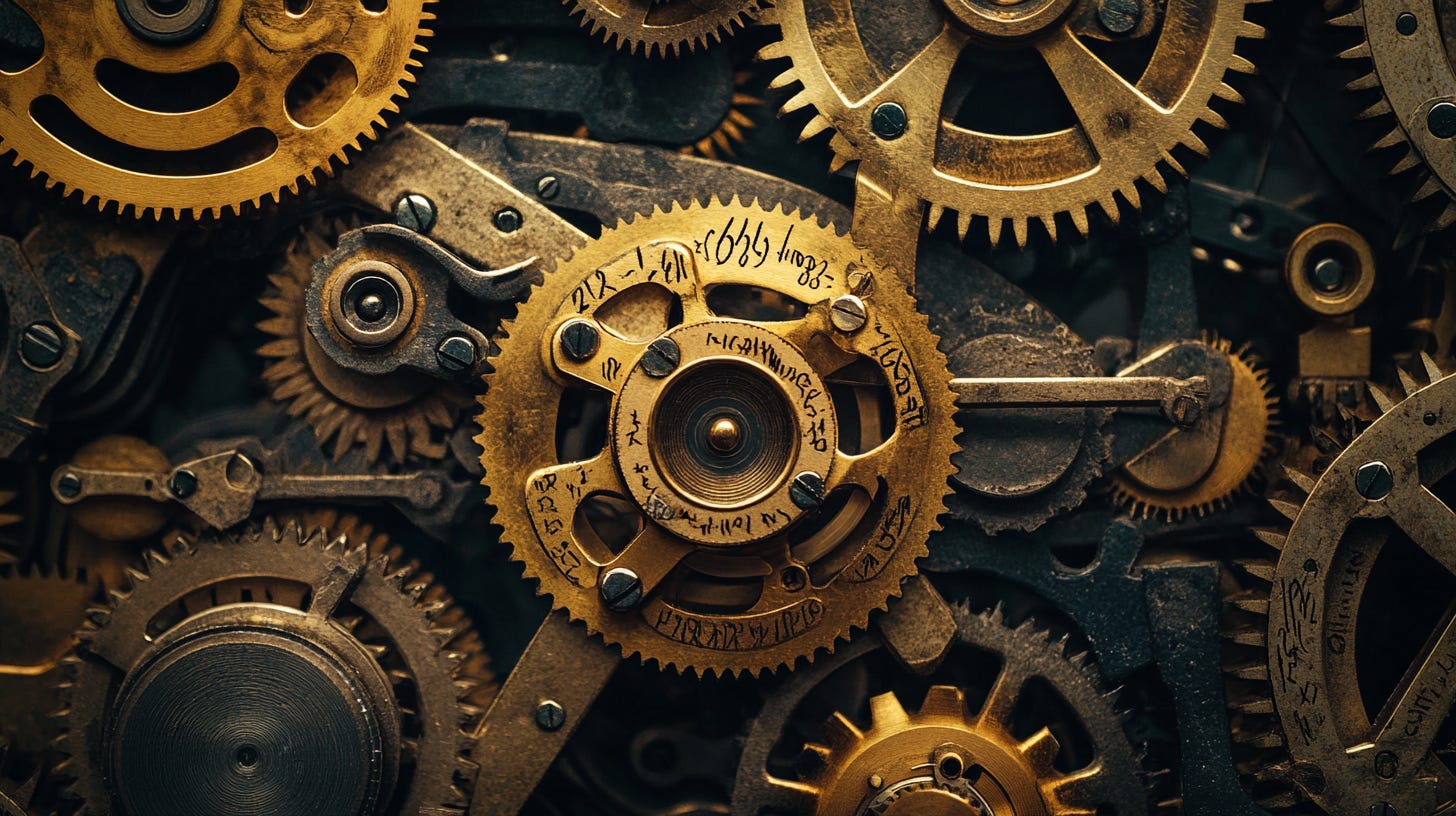
THE MACHINE
The Oklahoma City Thunder Dynasty
A Sports Fiction Novel
Chapter 2: The Machine Beneath The Machine
June 2
The Oklahoma City Thunder won the 2025 NBA Championship on June 22nd, defeating the Indiana Pacers in seven games. Shai Gilgeous-Alexander was named Finals MVP. The city celebrated for a week.
Sam Presti was back in his office by June 23rd.
There is a photograph he keeps on his desk.
It was taken on the night of July 6, 2019 — the night the Oklahoma City Thunder traded Paul George to the Los Angeles Clippers. In the photograph, Presti is sitting at a conference table in the back offices of Paycom Center, surrounded by his front office staff, a whiteboard covered in names and numbers behind him. He is not celebrating. He is not grieving. He is staring at something just beyond the camera — not at the person taking the photograph but through them, at something further away, something only he can see.
His staff remember that night differently depending on who you ask. Some remember it as the quietest night they had ever spent in a professional sports front office. Others remember it as the most energized — a kind of charged, electric stillness, like the atmosphere before a storm. What everyone agrees on is this: by the time the trade was officially announced, Presti had already moved on. The George era was over. The next era had already begun. The whiteboard behind him in the photograph was not a record of what had just happened. It was a blueprint for what came next.
The Thunder received, in exchange for Paul George: Shai Gilgeous-Alexander, Danilo Gallinari, four unprotected first-round picks, one protected first-round pick, and two pick swaps from the Los Angeles Clippers. The picks broke down to Clippers unprotected firsts in 2022, 2024 and 2026, along with Miami firsts in 2021 and 2023, plus swap rights in 2023 and 2025. Five picks. Two swaps. And a 20-year-old Canadian guard who had just finished his rookie season and whom almost nobody outside of basketball obsessives had properly noticed yet.
Just six days later, on July 12, Presti completed a second blockbuster. Russell Westbrook — the franchise’s other cornerstone, a former MVP, one of the most physically dominant players the league had ever seen — was traded to the Houston Rockets. In exchange, the Thunder received veteran point guard Chris Paul, first-round picks in 2024 and 2026, and the right to swap first-rounders in 2021 and 2025.
In less than a week, the Oklahoma City Thunder had dismantled an entire era of professional basketball and collected what would become the foundation of the greatest dynasty in NBA history.
Nobody outside Oklahoma City understood what had just happened.
To understand Sam Presti you have to understand something about the way he thinks about time.
Most NBA front offices operate on a two to three year planning horizon. Build a contender now. Win now. If it doesn’t work, retool and try again. The pressure of ownership, of fan bases, of media cycles, of player contracts — all of it compresses the planning window down to the immediate future. The question most general managers are asking at any given moment is some version of: how do we win this year?
Presti has never operated this way. The question Presti asks — the question he has always asked, from his earliest days as a $250-a-month intern in San Antonio who talked his way into an internship under RC Buford, through his time building the Seattle SuperSonics roster before the move to Oklahoma City, through all fifteen years of running the Thunder — is a different question entirely.
What does this organization look like in ten years?
Not five. Ten. Sometimes fifteen. The cap projections on his monitors on the morning of Game 1 of the 2025 playoffs were for the 2028-29 season — four years away. By that point he had already been modeling them for eighteen months. He had run scenarios in which SGA stayed healthy and scenarios in which he didn’t. Scenarios in which the salary cap grew at five percent annually and scenarios in which it grew at eight. Scenarios in which Chet Holmgren developed into a perennial All-Star and scenarios in which he plateaued. Every variable accounted for. Every contingency planned.
This is not how most people think. It is not how most organizations think. It is, however, how dynasties are built.
The picks started arriving in 2019.
From the Paul George trade: four unprotected Clippers first-round picks, one protected first, two swap rights. From the Russell Westbrook trade: two Houston first-round picks, two additional swap rights — and Chris Paul himself, whose value Presti immediately began converting into further assets.
Paul spent one remarkable season in Oklahoma City — making the All-Star team, leading an undermanned Thunder squad to the playoffs, proving he still had something left. Then, having maximized Paul’s value to its absolute peak, Presti traded him to the Phoenix Suns in November 2020. The return: Kelly Oubre, Ricky Rubio, Ty Jerome, Jalen Lecque and a 2022 first-round pick from Phoenix. From there, Presti flipped Oubre to Golden State for another protected first, packaged Rubio in a draft-night deal to move up and select a prospect, and traded Danny Green — received in the Dennis Schroder deal with the Lakers — to Philadelphia for Al Horford and a protected 2025 first-round pick.
Each transaction flowing into the next. Each asset converted into something more useful. A machine within a machine, running constantly, producing capital that would take years to fully understand.
By June 2021, the Oklahoma City Thunder officially owned 34 draft picks across the next seven years. Seventeen first-rounders. Seventeen second-rounders. The most concentrated stockpile of future draft capital in the history of professional basketball.
The reaction around the league ranged from bewilderment to mockery. A team couldn’t play seventeen first-round picks. A roster only had fifteen spots. What was the point of accumulating assets you couldn’t possibly deploy?
The point, as Presti understood it and almost nobody else did, was optionality.
Draft picks are not players. They are possibilities. They are leverage. They are the currency with which you acquire the things you actually need — whether that means trading up for a generational talent, absorbing a bad contract in exchange for future capital, signing a veteran to an overpaid deal by offering picks as sweeteners, or simply having the freedom to make mistakes. Teams without draft capital are prisoners of their own rosters. Teams with draft capital can reshape themselves at any moment.
Presti had made Oklahoma City the most financially flexible franchise in professional basketball. And he had done it at the exact moment the franchise’s best player — a 20-year-old Canadian guard named Shai Gilgeous-Alexander — was entering the developmental phase of his career.
The timing was not an accident.
There is a concept in organizational theory called the flywheel effect. It was popularized by the business writer Jim Collins in his book Good to Great — the idea that great organizations don’t transform themselves through single dramatic moments but through the consistent application of the right pressures over time, building momentum slowly until the flywheel is spinning so fast that results come almost automatically.
The Oklahoma City Thunder was a flywheel.
From 2019 to 2025 Presti applied the same pressures consistently. Draft well. Develop players better than anyone in the league. Sign veterans to team-friendly contracts. Trade assets at peak value before they decline. Accumulate future capital. Maintain financial flexibility. Repeat.
Each year the flywheel spun a little faster. SGA improved. Holmgren arrived and immediately changed the defensive profile of the team. Cason Wallace was drafted and put together an All-Defensive caliber season in just his second year. Jalen Williams quietly developed into one of the most complete two-way players in the league. Isaiah Hartenstein was signed — not as a star, but as exactly the physical, intelligent complementary big the roster needed. Alex Caruso was acquired — not for his scoring but for his defensive intensity and his championship DNA.
None of these moves were accidental. None of them were lucky. Each one fit into a plan that had been constructed years before the move was made.
By 2025 the flywheel was spinning at a speed that no other organization in professional basketball could match.
There is a moment in every dynasty when the people watching from the outside finally understand what the people on the inside have known for years.
For the Oklahoma City Thunder that moment came on the morning of the championship parade, when a reporter asked Presti what the dynasty’s secret was. He had been asked versions of this question before. He had always deflected, offering the standard front office answers about culture and player development and organizational stability.
This time he paused for a long moment before answering.
“We never confused the present for the future,” he said. “Most organizations spend all their time trying to protect what they have. We spent our time building what we wanted to have. Those are very different activities.”
The reporter nodded and moved on. Most of the people listening didn’t fully understand what he had said. The sports radio hosts spent that afternoon arguing about whether the Thunder could repeat.
Presti walked back to his office, sat down in front of his three monitors, and returned to his cap projections for 2028-29.
He already knew they would repeat. That wasn’t what he was thinking about.
He was thinking about 2033.
Tomorrow: Chapter 3 — “SGA” — A portrait of the quiet superstar from Hamilton, Ontario who became the greatest player in Thunder history and the man whose patience made everything possible.
— End of Chapter 2 —
The Machine is a sports fiction novel published daily throughout June. Subscribe to receive each chapter directly to your inbox every morning.
Missed Chapter 1? Read it here: THE MACHINE - Chapter 1: The Smallest City in the League
📊 DYNASTY TRACKER Updated each chapter
🏆 Championships: 1 — June 22, 2025 — defeated Indiana Pacers in 7 games 👤 SGA: 26 years old — regular season MVP and Finals MVP 🌟 2025 draft: Thomas Sorber (pick 15), Brooks Barnhizer (pick 44 — two-way) 📋 Future picks: Multiple future firsts owned through 2032 💰 Luxury tax status: Non-taxpayer 🏀 Core roster: SGA, J.Williams, Holmgren, Hartenstein, Dort, Caruso, Wallace, Sorber 📝 Current moment: Summer 2025 — the parade is over, Presti is already planning 📖 Chapter focus: The real trades that built the dynasty